
Naoya Inoue Dominates 2026 Super Featherweight Division
Naoya Inoue stands as the most feared fighter in boxing today. The compact destroyer from Zama, Japan has carved
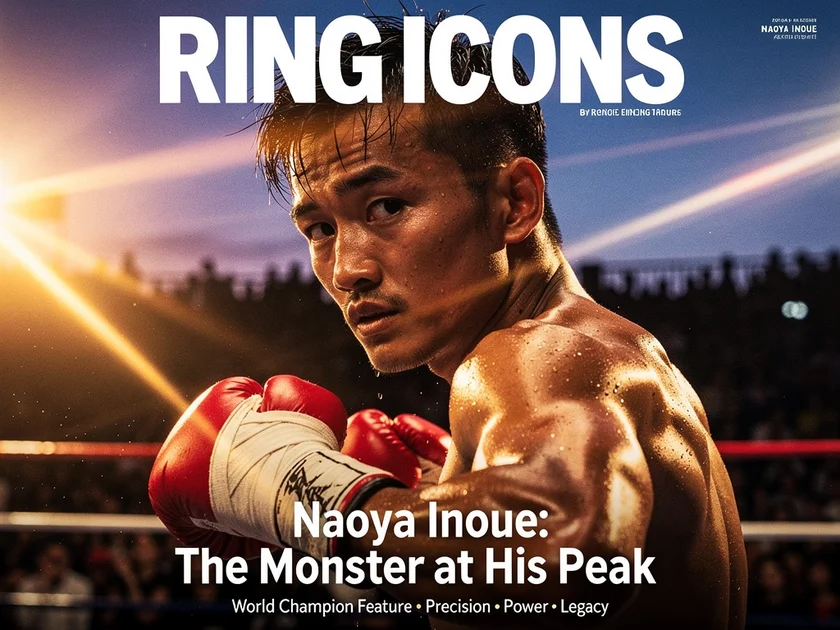
Naoya Inoue stands as the most feared fighter in boxing today. The compact destroyer from Zama, Japan has carved through four weight classes with a precision that old-school trainers discuss in hushed tones. As of April 2026, he holds the WBA, WBC, IBF, and WBO super featherweight titles simultaneously and has never been dropped as a professional.
Breaking down his career numbers reveals a clear pattern. Inoue does not simply outpoint opponents. He dismantles them. His knockout-to-win ratio across his super bantamweight and super featherweight campaigns ranks among the highest of any unified champion in the modern era.
How Naoya Inoue Built a Four-Division Legacy
Naoya Inoue became a world champion at light flyweight in 2014 and has since conquered super flyweight, bantamweight, and super bantamweight before moving up to 130 pounds. Each transition brought fresh skeptics who questioned whether his power would travel up the weight ladder. Each time, the answer arrived quickly.
His 2023 unification run at super bantamweight included stoppages of Stephen Fulton Jr. and Marlon Tapales, confirming him as the sport’s most complete fighter regardless of division. The Tapales stoppage came in round seven and was widely ranked among the five best single performances of that calendar year by major boxing media.
The move to super featherweight represented the boldest step of his career. Fighters who drain themselves to make weight often lose that sudden-twitch violence that defines elite punchers. Inoue did not lose it. His jab alone, thrown with the hip rotation of a much larger man, generates force that ringside observers consistently describe as outlying for the weight class.
What Makes Naoya Inoue Difficult to Prepare For
Naoya Inoue presents a tactical problem most opponents cannot solve in the gym. His southpaw-to-orthodox fluidity, combined with an unusually high punch output for a knockout puncher, forces challengers into a no-win choice: stay outside and absorb the jab, or come forward and walk into the right hook that has ended so many nights early.
Film study shows a fighter who adjusts mid-fight with discipline. Inoue shifts his weight distribution and changes punch angles between rounds in ways that reveal a deep tactical vocabulary. That adaptability separates him from pure pressure fighters. He occupies a rare middle ground.
Tracking his dominance over three divisions at the top of the pound-for-pound rankings reveals something telling. Inoue has never been seriously hurt on the cards through the middle rounds. He has never needed a survival round to secure a decision. That kind of clean control across weight classes is extraordinarily rare. Roberto Duran did it. Salvador Sanchez suggested he might before his death cut that story short.
The Super Featherweight Division and Inoue’s Rivals
The super featherweight division entering 2026 carries legitimate depth below Inoue’s position at the top. Promoters at Top Rank and Matchroom Boxing have circled potential matchups involving former champions who believe the 130-pound limit gives them a physical edge over a fighter who spent years at lighter weights.
Oscar Valdez, a former WBC super featherweight champion, surfaces regularly in matchup discussions. Valdez’s amateur pedigree and professional durability would make him a more credible test than several recent Inoue opponents. Emanuel Navarrete, another former champion at the weight, brings a high-volume rough-house style that could theoretically disrupt Inoue’s rhythm. Neither match appears imminent based on current promotional calendars, but both represent the kind of opposition that Inoue’s team at Ohashi Gym has flagged as priorities for late 2026.
One counterpoint deserves acknowledgment. Inoue has not yet faced a pure boxer at super featherweight — a long, rangey fighter who can beat him to the punch and force him to chase for twelve rounds. His bantamweight and super bantamweight opponents tended to engage rather than run. A disciplined, movement-based challenger at 130 pounds could present a different kind of test, even if the pound-for-pound rankings currently show no one close to his level.
Key Developments in Inoue’s 2026 Campaign
- Inoue’s father and head trainer Shingo Inoue has overseen every professional camp of his son’s career — a continuity of preparation virtually unmatched among current world champions at any weight.
- The Ohashi Boxing Gym in Zama, Kanagawa Prefecture has produced multiple Japanese national champions alongside its most famous product, reflecting a genuine culture of technical development.
- At super featherweight, Inoue carries a natural frame that trainers have described as ideal for the weight — wide shoulders, short limbs, and exceptional core rotation that maximizes leverage on every punch.
- Inoue’s promotional team has historically scheduled two fights per year, a pace that keeps him sharp without overexposing him to the accumulated damage that shortens careers.
- His contract structure with Ohashi Gym gives the Inoue family considerable control over fight selection, venue, and broadcast rights — an arrangement that has kept him out of mismatches while still delivering compelling opposition.
What Comes Next for Boxing’s Pound-for-Pound King
Naoya Inoue’s path through the rest of 2026 will likely center on mandatory defenses across his four belt obligations and at least one voluntary defense against a name opponent who can drive pay-per-view numbers in Japan and internationally. The draft strategy for his next opponent will weigh marketability against competitive risk — a calculation that has landed in Inoue’s favor at every weight so far.
Whether a truly elite super featherweight challenger emerges before he considers a move to lightweight at 135 pounds will define how history judges this chapter of his career. His natural frame still sits comfortably at 130 pounds without the severe weight management that typically accelerates a move up in class. The sweet science has rarely seen a fighter accumulate this much hardware this cleanly across this many divisions. Inoue is not finished adding to the count.
How many world titles has Naoya Inoue held across his career?
Naoya Inoue has held world titles across four weight divisions — light flyweight, super flyweight, bantamweight, and super bantamweight — before claiming all four major belts at super featherweight. His first world title came in 2014, making his run to undisputed status at multiple weights one of the fastest in modern boxing history. No active fighter currently holds titles at as many divisional levels.
Who trains Naoya Inoue and where does he prepare for fights?
Naoya Inoue is trained exclusively by his father, Shingo Inoue, at the Ohashi Boxing Gym in Zama, Kanagawa Prefecture, Japan. That father-son training relationship has been continuous since Inoue’s amateur days, a rarity among elite professionals. The gym operates on a technical development model and has produced multiple Japanese national title holders beyond its most decorated fighter.
Has Naoya Inoue ever been knocked down as a professional?
Naoya Inoue has never been knocked down across his entire professional career, a record that spans four weight classes and opponents ranging from domestic Japanese challengers to unified world champions. His defensive footwork and punch-anticipation timing are credited by corner men who have worked against him as the primary reasons his chin has never been seriously tested on the canvas.
What is Naoya Inoue’s nickname and why does he have it?
Naoya Inoue is known as “The Monster” — a nickname earned early in his career based on his disproportionate punching power relative to his size. Japanese boxing media applied the label after his early stoppages at light flyweight and super flyweight, where his knockout ratio far exceeded historical norms for those lighter weight classes. The name has followed him through every division since.
Could Naoya Inoue move up to lightweight in 2026 or 2027?
A move to lightweight at 135 pounds has been discussed as a long-term possibility rather than an immediate plan. Inoue’s team has prioritized completing super featherweight mandatory obligations first. Historically, Inoue has made each divisional jump only after fully clearing the available opposition at the previous weight — a pattern that suggests any lightweight campaign would follow a similar methodical approach rather than a rushed timeline.