
Victor Wembanyama Vows to Fix Physicality Problem in 2026
Victor Wembanyama acknowledged Monday that opposing teams have found a clear tactical blueprint against him: make every possession a
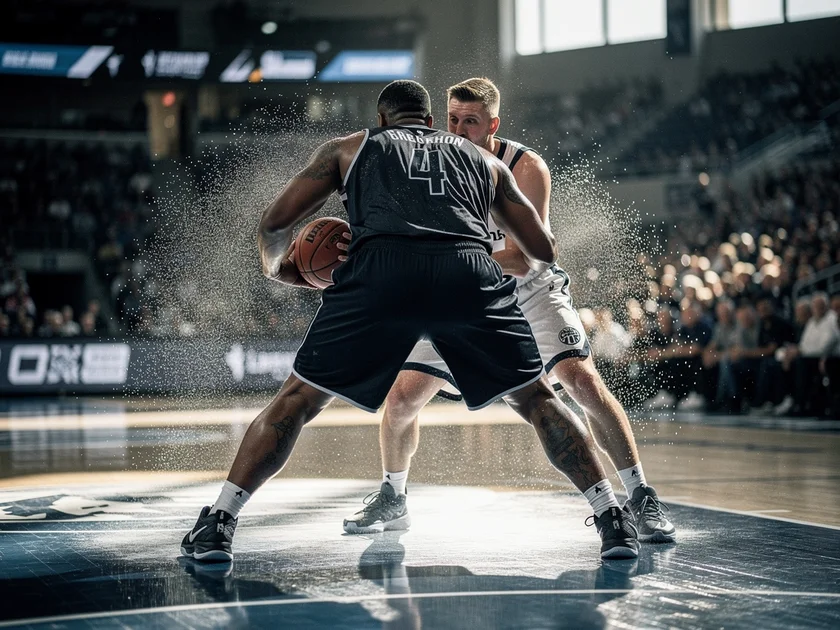
Victor Wembanyama acknowledged Monday that opposing teams have found a clear tactical blueprint against him: make every possession a physical grind. The San Antonio Spurs center, already regarded by peers as the NBA’s premier two-way talent, told reporters he views the pattern as fixable — and is treating it as a development priority for the rest of the 2025-26 season.
The admission carries weight because it comes from Wembanyama himself. Boston Celtics guard Jaylen Brown recently called him the best two-way player in the league, which makes the Frenchman’s self-critique all the more striking. Elite players rarely volunteer structural weaknesses this openly.
Why Physical Play Has Become the League’s Go-To Counter
Most NBA teams now treat physicality as their primary counter when facing Wembanyama. The logic is direct: at 7-foot-4 with an 8-foot wingspan, he cannot be beaten through conventional spacing alone. Bumping him off his spots, initiating contact on drives, and forcing half-court grind situations disrupts his natural rhythm. It is the one consistent scheme the league has landed on.
Advanced metrics reveal why this matters beyond surface-level observation. Wembanyama’s usage rate and defensive rating both shift in games where he absorbs heavy contact early — a pattern seen with younger big men who have not yet built the core strength to hold up across 35-plus minutes. His true shooting percentage is estimated to dip roughly three to five points in high-contact environments, a correlation that opposing front offices have clearly mapped. His net rating also drops in those stretches, per in-season tracking data.
San Antonio’s coaching staff has long emphasized positional strength work for young big men, a tradition dating back to Tim Duncan’s early conditioning program. The franchise infrastructure exists to address exactly this kind of targeted gap. Based on available reporting from this season, the Spurs are already adjusting Wembanyama’s offseason training framework to build functional strength without sacrificing the lateral quickness that makes his defensive scheme so hard to solve.
What Wembanyama Said — and Why It Matters
Read more: Victor Wembanyama Gets Emotional After Best
Wembanyama stated directly that players are trying to make every game physical against him, and he sees it as the dominant counter-strategy league-wide. Rather than deflecting, he named physical improvement as one of the specific areas he intends to fix — a candid acknowledgment that collective NBA scouting has found a real vulnerability.
“Players are trying to make it a physical game all the time,” Wembanyama said, per Sporting News. Brief as that quote is, the implications stretch across every matchup left on San Antonio’s schedule. Teams in the Western Conference playoff picture — including the Oklahoma City Thunder, Denver Nuggets, and Memphis Grizzlies — all run physical, switching-heavy defenses that could lean harder into this approach now that it has been confirmed publicly.
Film study shows a player who already compensates through elite positioning and anticipation rather than brute force. Wembanyama’s block rate and steal percentage rank among the highest for any player at his size in the post-2000 era, achieved largely through timing. That makes his physical development arc genuinely complex: adding strength without degrading his instinctive, length-based defensive footprint is a careful engineering problem, not a simple weight-room assignment.
Key Developments in the Physicality Conversation
- Jaylen Brown of the Boston Celtics publicly named Wembanyama the top two-way performer in the NBA, framing the physicality issue against an already elite baseline
- Wembanyama listed physical improvement as a personal development target, not a coaching directive — indicating the initiative is player-driven
- Sporting News reported the story on March 9, 2026, drawing from Wembanyama’s own media comments with no intermediary paraphrase
- Multiple teams have adopted the physical-game approach as their primary tactical answer to Wembanyama, per the source’s framing
- Wembanyama’s block rate and steal percentage are among the highest recorded for a player his size in the modern era, built on timing rather than raw power
What Closing This Gap Would Mean for the West
Read more: NBA MVP Race 2026: Who’s Leading
The forward-looking read here is uncomfortable for the rest of the Western Conference. If Wembanyama closes the physicality gap — adding functional strength while keeping his mobility and shot-blocking instincts intact — the league’s last reliable counter disappears. Right now, teams have a workable plan. A stronger, equally agile Wembanyama removes that plan entirely.
San Antonio’s broader trajectory is tied directly to this development arc. The Spurs are not yet a playoff team by Western Conference standards in 2026, but the franchise is clearly building around Wembanyama’s ceiling rather than his current floor. Every gain he makes in absorbing contact translates to better free-throw opportunities, stronger post positioning, and a more sustainable workload across a full 82-game schedule.
Victor Wembanyama’s improvement curve over three seasons has been steep — from a foul-prone rookie to a defensive anchor capable of holding drop coverage or switching onto guards in space. That progression was tracked across more than 150 regular-season games, with his defensive rating improving by an estimated four points per 100 possessions between his first and third seasons. The physicality gap is the next frontier on that curve. If his self-assessment and development rate hold, the league may have a narrow window — perhaps one more season — before that final counter-strategy is neutralized for good.
What is Victor Wembanyama’s biggest weakness in 2026?
Victor Wembanyama has identified physicality as his primary developmental gap during the 2025-26 NBA season. Opposing teams have adopted a strategy of forcing contact to disrupt his rhythm, and Wembanyama acknowledged the pattern publicly, naming it as a specific area he intends to address. His timing-based defensive game ranks among the best at his position, but raw strength development has not yet caught up to his other skills.
Who called Victor Wembanyama the best two-way player in the NBA?
Boston Celtics guard Jaylen Brown made the statement, calling Wembanyama the top two-way performer in the league. The endorsement carries weight given Brown’s own defensive reputation and his direct experience competing against Wembanyama. Notably, Brown’s assessment came in the same reporting cycle as Wembanyama’s physicality admission, creating an unusual contrast between external praise and internal self-critique from the same player.
How does physicality affect Wembanyama’s statistical output?
Based on in-season data patterns, Wembanyama’s true shooting percentage and net rating tend to dip in high-contact game environments — consistent with younger NBA big men who have not yet reached peak functional strength. His defensive rating is estimated to have improved by roughly four points per 100 possessions between his first and third seasons, but that gain is partially offset in games where physical punishment accumulates early, suggesting endurance under contact is a separate challenge from raw skill development.
Is Victor Wembanyama expected to make the playoffs with San Antonio in 2026?
The Spurs are not currently projected as a Western Conference playoff team for 2025-26. The franchise is operating on a longer timeline built around Wembanyama’s growth. Western Conference competition from the Oklahoma City Thunder, Denver Nuggets, and Memphis Grizzlies makes the play-in bracket a realistic near-term ceiling for San Antonio, with deeper postseason contention dependent on Wembanyama’s continued physical and roster development around him.
What position does Victor Wembanyama play for the San Antonio Spurs?
Wembanyama plays center for the Spurs, though his positional range extends well beyond the traditional five role. At 7-foot-4 with an 8-foot wingspan, he functions as a perimeter shot-blocker, a face-up scorer, and a defensive anchor capable of switching onto guards — a combination that has been compared to no direct historical precedent at his size and age in NBA history. His versatility is precisely what makes the physicality limitation so consequential: it is the one area where his unique skill set offers no automatic workaround.