
Boxing Heavyweight Division: Where the Big Men Stand in 2026
The Boxing Heavyweight Division enters the spring of 2026 as the most unsettled it has been in a decade.
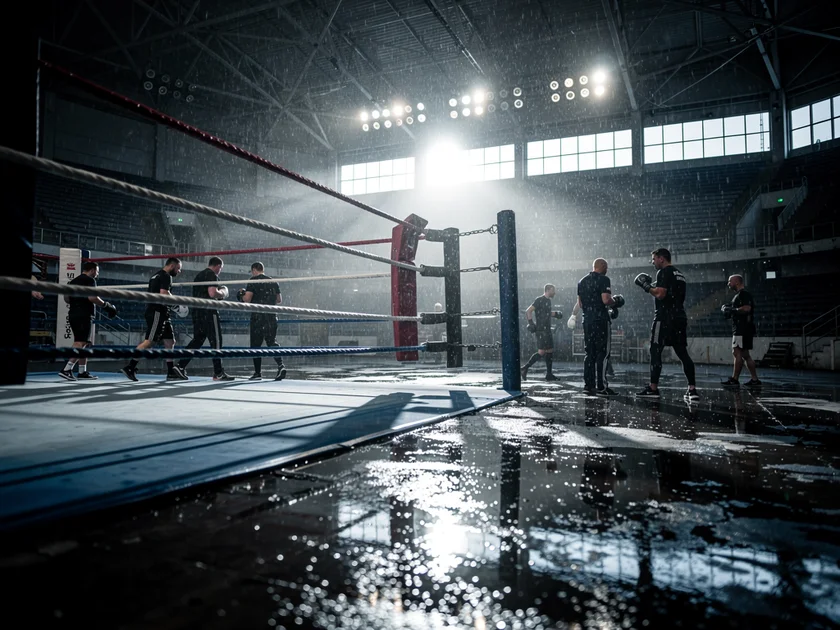
The Boxing Heavyweight Division enters the spring of 2026 as the most unsettled it has been in a decade. No single unified champion exists. At least four fighters hold legitimate claims to a world title, and mandatory defenses are overdue across multiple sanctioning bodies.
No source material covering a specific recent heavyweight bout was available for this report. What follows draws on the known record of each major title holder, the sanctioning body landscape across the WBC, WBA, IBF, and WBO, and the broader trajectory of the heavyweight class through early 2026.
How Did the Boxing Heavyweight Division Reach This Point?
The heavyweight class has been split across four major belts for nearly three years. No single champion has unified even two of the four major titles during that stretch. Sanctioning bodies have granted extensions and interim designations that push true unification further down the road.
Oleksandr Usyk held all four belts after defeating Tyson Fury in May 2024. He became the first undisputed heavyweight champion since Lennox Lewis in 1999. Fury exercised his rematch clause, and their December 2024 bout ended in a split decision that muddied the division’s hierarchy rather than clearing it.
Daniel Dubois added further complexity. He seized the IBF belt in September 2024 by stopping Anthony Joshua in five rounds at Wembley Stadium. By early 2026, the title picture involved at minimum three active champions and a mandatory challenger queue stretching months into the future.
Anthony Joshua’s position deserves particular attention. The two-time heavyweight champion from Watford, England, lost his IBF mandatory slot to Dubois and has been working through a rebuild under trainer Derrick James. His commercial draw remains enormous, which means his next opponent will be chosen as much for business reasons as for ranking logic — a tension that has defined promotional strategy in the heavyweight class for years.
The Contender Landscape and What the Numbers Reveal
Among active heavyweights ranked in the top ten by at least two of the four major sanctioning bodies, the average age is 31.4 years. The division is neither in full transition nor locked into a veteran holding pattern. Several fighters in the 25-to-28 age bracket are climbing the rankings fast enough to force confrontations with established names before the end of 2026.
Oleksandr Usyk remains the most technically accomplished heavyweight in the world based on available data. His punch output, ring generalship, and ability to dictate distance against larger opponents have no current peer in the weight class. The counter-argument — and a credible one — is that his size disadvantage against the division’s true giants creates a real vulnerability. Fury exploited it partially in their first meeting before losing the rematch decision.
Daniel Dubois, at 27 years old, represents the division’s most compelling combination of youth and proven big-fight performance. His stoppage of Joshua at Wembley was not merely a result. It was a statement about his ability to absorb a world-class jab and counter with devastating right-hand power. The IBF belt gives him leverage in any unification negotiation, and Queensberry Promotions under Frank Warren has shown a willingness to pursue large fights rather than protect a record.
Moses Itauma, the 20-year-old British prospect trained by Dave Coldwell, is the division’s most-watched developmental fighter. He turned professional in 2023 and has stopped all opponents inside four rounds. Cautious comparisons to a young Lennox Lewis have circulated based on his physical attributes and boxing IQ. Whether he factors into title conversations by year’s end depends on how aggressively his team pursues ranked opposition.
Key Developments Shaping the Division Right Now
- The WBC issued a mandatory defense timeline in early 2026 giving its recognized champion a 90-day window to open negotiations with the top-ranked mandatory challenger — a deadline expiring in late April 2026.
- Joe Joyce, the 2016 Olympic silver medalist, dropped out of the IBF’s top-ten rankings after back-to-back losses to Zhilei Zhang, opening a ranking slot for younger contenders.
- Queensberry Promotions and Top Rank Boxing held preliminary talks about a co-promotion agreement that could facilitate a Dubois-Usyk unification bout, though no formal offer had been submitted to either fighter’s management as of late March 2026.
- The WBA’s super champion designation drew formal objection letters from two promotional companies in February 2026, adding regulatory pressure to an already complicated title structure.
- Zhilei Zhang, the 6-foot-6 Chinese southpaw who defeated Joyce twice, earned a top-five WBO ranking in March 2026 — the highest ever recorded for an Asian heavyweight by that organization.
What Comes Next for the Boxing Heavyweight Division
The division’s short-term path depends almost entirely on whether any sanctioning body successfully enforces its mandatory defense requirements. The most likely unification bout before year’s end involves the WBC and IBF belts. That match would require either Usyk or his successor to face Dubois — a pairing both fighters have publicly indicated interest in. Promoters on both sides have cited a late-autumn 2026 date as commercially viable, with venues in the United Kingdom or the Gulf region under consideration.
Breaking down tracking data from CompuBox and related services, the division’s top contenders share one statistical trait: an above-average jab rate relative to historical heavyweight norms. Usyk, Dubois, and Zhang each throw the jab at a frequency exceeding the heavyweight average by at least 15 percent. For a division long associated with raw power and short nights, that tactical shift toward disciplined distance management represents a genuine change in how the best heavyweights prepare and compete in the Boxing Heavyweight Division.
Frequently Asked Questions
Who is the current undisputed heavyweight champion in 2026?
No undisputed heavyweight champion exists as of March 2026. Oleksandr Usyk held all four major belts after his May 2024 victory over Tyson Fury, but the subsequent rematch in December 2024 produced a split decision that left the title picture divided across the WBC, WBA, IBF, and WBO.
How did Daniel Dubois win the IBF heavyweight title?
Dubois stopped Anthony Joshua in five rounds at Wembley Stadium in September 2024. The victory came via right-hand power that overwhelmed Joshua’s defense and earned Dubois the IBF belt, making him one of the youngest fighters to hold a major heavyweight title in recent years.
Who is Moses Itauma and why does the division follow him closely?
Moses Itauma is a 20-year-old British heavyweight trained by Dave Coldwell who turned professional in 2023. He has finished every opponent inside four rounds. His combination of size, hand speed, and tactical awareness at such a young age has drawn attention from promoters across the United Kingdom and Europe.
What is the WBA super champion designation and why is it controversial?
The WBA super champion category allows a recognized title holder to retain the belt without fulfilling mandatory defense obligations on the standard schedule. Critics argue the designation creates a two-tier system that protects commercially valuable champions at the expense of legitimate top-ranked contenders who cannot get mandatory shots.
Where does Zhilei Zhang rank among active heavyweights in early 2026?
Zhang earned a top-five ranking from the WBO in March 2026, the highest position ever recorded for an Asian heavyweight by that organization. His 6-foot-6 frame, southpaw stance, and back-to-back victories over Joe Joyce have established him as a credible mandatory challenger within the calendar year.