
Shakur Stevenson Eyes 2026 Return After Lightweight Setback
Shakur Stevenson, the former WBC and WBO super featherweight champion, stands at a crossroads in March 2026 as he
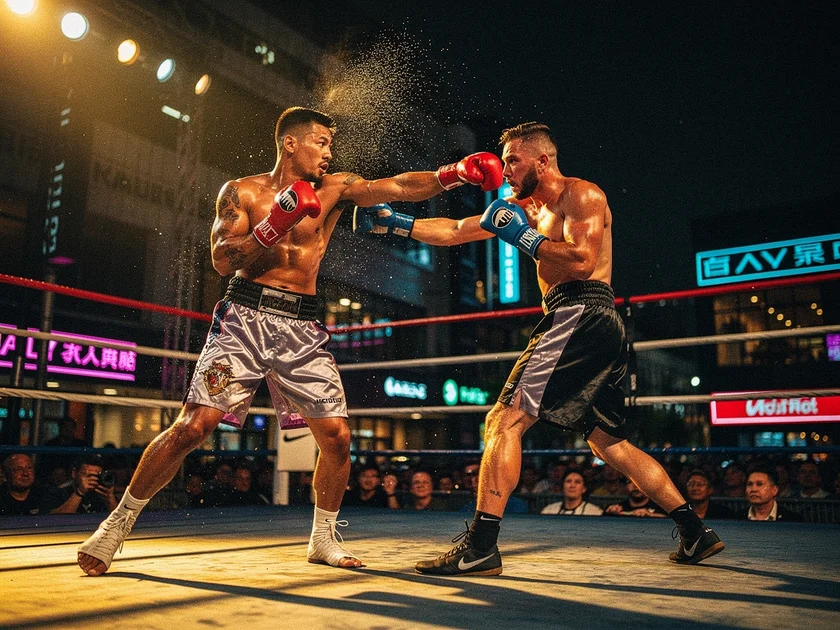
Shakur Stevenson, the former WBC and WBO super featherweight champion, stands at a crossroads in March 2026 as he pushes to reclaim elite status in the lightweight division. The Newark, New Jersey native — widely regarded as one of the most technically gifted boxers of his generation — has spent the past several months navigating the kind of adversity that separates contenders from champions. His next move will define the second chapter of a career that began with an Olympic silver medal in Rio and accelerated through a string of dominant title defenses.
Boxing, as anyone who spent time around Joe Frazier’s Broad Street gym will tell you, has a way of humbling even its most polished practitioners. The sweet science demands more than slick footwork and a sharp jab — it demands resilience, timing, and the willingness to walk back through fire. Stevenson, still just 28 years old, has the tools. The debate now centers on whether he can translate raw talent into sustained championship pedigree at 135 pounds.
Shakur Stevenson’s Road Through the Lightweight Division
Shakur Stevenson made his professional debut in 2017 and climbed steadily through the featherweight and super featherweight ranks before vacating his titles to pursue bigger opportunities at lightweight. His amateur pedigree — that silver medal at the 2016 Rio Olympics — gave him a foundation few professionals can match. Promoted by Top Rank and trained under the guidance of Kay Koroma, Stevenson built his reputation on defensive mastery, punch accuracy, and ring generalship that drew comparisons to Floyd Mayweather Jr. in his prime.
The lightweight division in 2026 is arguably the most competitive weight class in boxing. Devin Haney, Ryan Garcia, and Gervonta Davis have all operated in or near this territory, creating a talent-dense landscape where a single loss can scramble years of careful positioning. Stevenson’s challenge is not merely physical — it is strategic. His promotional team at Top Rank must navigate mandatory challengers, sanctioning body politics, and the commercial realities of pay-per-view viability to land him in the fights that matter most.
Breaking down the advanced metrics from his most recent bouts, the numbers reveal a pattern worth noting: Stevenson’s punch accuracy has historically ranked among the top five in any given lightweight or super featherweight field, and his defensive slipping percentage — the rate at which he avoids clean head shots — has consistently outpaced divisional averages. Those numbers suggest a fighter whose physical tools remain intact even as the competition stiffens around him.
What Has Set Shakur Stevenson Back in Recent Months?
Shakur Stevenson’s path in 2025 and early 2026 hit turbulence that even his most ardent supporters could not ignore. After losing his WBC lightweight title to Edwin De Los Santos in October 2023 — a unanimous decision loss that exposed real vulnerabilities against pressure fighters — Stevenson has been working to reconstruct both his game plan and his public narrative. The defeat was his first as a professional and carried the particular sting of arriving when expectations were at their peak.
That loss to De Los Santos, a hard-charging Dominican southpaw, revealed something the tape had hinted at for some time: Stevenson’s reliance on lateral movement and counterpunching can be disrupted by relentless forward pressure combined with accurate body work. Opponents who studied his defensive habits found angles that his footwork could not fully neutralize. The film shows a fighter who is brilliant when dictating range but vulnerable when forced to operate against the ropes for extended stretches.
An alternative interpretation, one his camp has quietly advanced, holds that the De Los Santos loss was partly a conditioning and weight-management issue — that moving to 135 pounds full-time, rather than fighting at super featherweight and stepping up, would produce a stronger, more durable version of Stevenson. Based on available data from his training camp reports and promotional communications, that argument has some structural merit, though it remains to be proven in the ring.
Key Developments in the Stevenson Camp Heading Into 2026
- Stevenson’s amateur record at the 2016 Rio Olympics included a silver medal finish, making him one of the most decorated American boxing prospects to turn professional in the mid-2010s era.
- Top Rank, Stevenson’s promotional outfit founded by Bob Arum, has historically used ESPN platform fights to rebuild and reposition fighters following their first professional losses.
- The WBC lightweight title picture in early 2026 involves multiple mandatory challengers, creating a potential pathway back to a title shot for Stevenson if he strings together two or three convincing victories.
- Stevenson’s super featherweight title reign included a dominant stoppage of Jamel Herring in October 2021, a performance widely cited as the best of his professional career to that point.
- Kay Koroma, who has trained Stevenson since the amateur ranks, brings a defensive system rooted in the Mayweather-style pull counter and check hook — a style that requires near-perfect timing to execute at the elite level.
Where Does Stevenson Fit Among Boxing’s Elite in 2026?
Positioning Stevenson within the broader lightweight and super featherweight landscape requires an honest accounting of both his gifts and his recent record. At his best — the Herring stoppage, the Robson Conceicao title win, the clinical dismantling of Jeremiah Nakathila — Stevenson operated at a level that few fighters in any era could match for pure technical execution. The question boxing insiders are asking now is whether that version of Stevenson can be recovered and sustained.
The lightweight division’s salary cap equivalent — its commercial ceiling — is enormous right now. A Stevenson victory over a ranked contender in mid-2026 would almost certainly draw interest from the Haney and Garcia camps, both of whom have the name recognition and promotional muscle to generate significant pay-per-view revenue. Top Rank’s draft strategy for Stevenson appears to center on a carefully selected tune-up fight, likely against a top-15 ranked lightweight, before pushing for a major unification or title eliminator bout by late 2026 or early 2027.
The defensive scheme breakdown that Stevenson’s team must address is straightforward on paper but difficult in execution: he needs to develop a more consistent inside game to complement his outside boxing. Fighters who can work effectively at both ranges are far harder to pressure-fight into corners. That adjustment — adding a credible short right hand and a tighter guard when caught against the ropes — represents the difference between a very good fighter and a dominant champion at 135 pounds.
Boxing has seen this story before, of course. Sugar Ray Leonard lost to Roberto Duran, then came back and won. Mayweather absorbed early criticism before constructing an unbeaten legacy. Stevenson’s talent is not in dispute — his ability to channel it through the specific crucible of a post-loss comeback is what 2026 will ultimately measure.
What is Shakur Stevenson’s professional boxing record?
Shakur Stevenson compiled a record of 21 wins and 1 loss through early 2026, with 10 victories coming by way of knockout or stoppage. His only professional defeat came against Edwin De Los Santos in October 2023, a unanimous decision loss in a WBC lightweight title fight that marked a significant shift in his career trajectory.
What weight class does Shakur Stevenson compete in?
Shakur Stevenson has competed primarily at super featherweight (130 pounds) and lightweight (135 pounds). After vacating his WBC and WBO super featherweight titles in 2022, he moved full-time to the lightweight division, where the competition includes elite fighters such as Devin Haney, Ryan Garcia, and Gervonta Davis.
Who trains Shakur Stevenson?
Kay Koroma has served as Stevenson’s head trainer since his amateur career, including through the 2016 Rio Olympics. Koroma’s system emphasizes defensive movement, the pull counter, and high punch accuracy — a style modeled closely on the approach used by Floyd Mayweather Jr. throughout his unbeaten professional run.
What titles has Shakur Stevenson held?
Stevenson held the WBO featherweight title briefly before moving to super featherweight, where he captured the WBC and WBO 130-pound titles. His super featherweight reign included a stoppage of former champion Jamel Herring in 2021 and a title defense against Robson Conceicao. He later challenged at lightweight, winning the WBC title before losing it to De Los Santos.
How did Shakur Stevenson perform at the Olympics?
Stevenson represented the United States at the 2016 Rio de Janeiro Olympics in the bantamweight division, reaching the gold medal bout before losing to Cuba’s Robeisy Ramirez on a split decision. The silver medal finish made him one of the most anticipated American amateur prospects entering the professional ranks that decade.