
NBA Salary Cap Rules Reshaping 2026 Roster Decisions
The NBA Salary Cap has never been a static number — and in 2026, its grip on roster construction
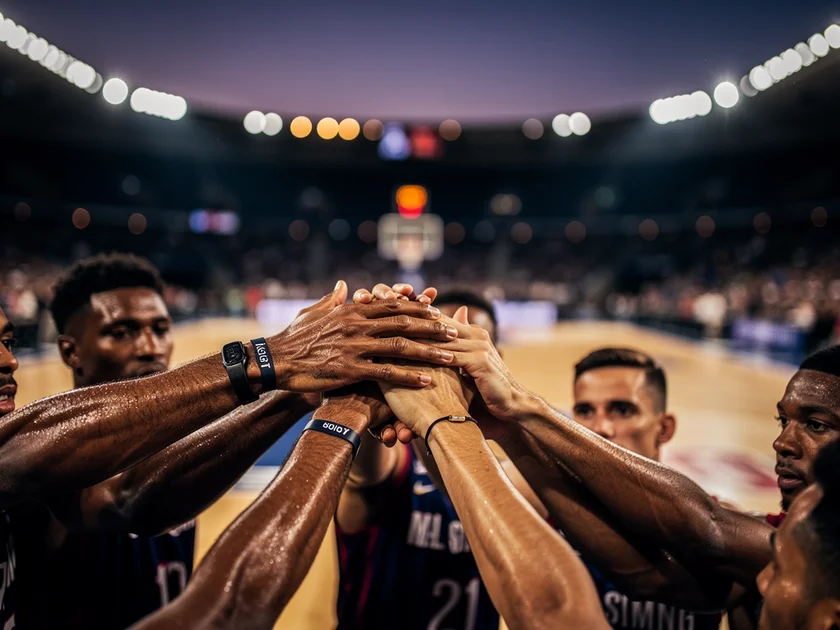
The NBA Salary Cap has never been a static number — and in 2026, its grip on roster construction is tighter than ever. Front offices are juggling luxury tax thresholds, second apron penalties, and max contract obligations that leave almost no margin for error. Every dollar counts.
The NFL’s cap crunch stories this week — like Cleveland restructuring Deshaun Watson’s deal to clear $35.7 million in space — offer a sharp parallel to what NBA general managers face each summer. Restructures, buyouts, and creative accounting are standard tools now, across all professional sports.
Why the Cap Hits Different in 2026
The NBA’s tiered penalty system punishes repeat luxury tax offenders far more aggressively than old rules ever did. Teams sitting above the second apron lose the ability to aggregate salaries in trades, sign buyout players, and use the mid-level exception. That’s not a slap on the wrist. That’s a straitjacket — and several contenders are already wearing it.
Franchises that committed to back-loaded supermax extensions in 2023 and 2024 are now watching those contracts balloon just as cap growth has leveled off. The projected cap for 2025-26 landed near $141 million, with the luxury tax threshold around $171 million and the first apron at roughly $178 million. Golden State, Boston, and Phoenix have all flirted with those numbers, forcing front-office brass to choose between depth and star power.
The second apron sits near $188 million. Cross it, and roster flexibility largely disappears. A franchise above that line cannot trade its own first-round pick more than seven years out, cannot send cash in deals, and cannot use the bi-annual exception. For a team trying to reload around an aging core, those restrictions can accelerate a rebuild by three or four years — ready or not.
How Front Offices Are Engineering Relief
Read more: NBA Trade Rumors: Kawhi Leonard to
NBA front offices are pulling every lever to manufacture breathing room. Stretch provisions, trade exceptions, and veteran minimum deals have become standard practice rather than last resorts.
The stretch provision lets a team spread a waived player’s cap hit over double the remaining contract years plus one. A player owed $30 million across two years costs $10 million annually over five years under the stretch — painful, but survivable. Several contenders have already used this heading into 2026, quietly absorbing dead money to clear room for free agency targets.
Trade exceptions — created when a team takes back less salary than it sends out — are another underrated piece of the puzzle. A $15 million exception can absorb a player within a year without sending out matching salary. Teams that stockpile these exceptions consistently outperform cap-strapped rivals when mid-season deals surface. The numbers reveal a clear pattern: clubs with clean cap sheets and banked exceptions close more deadline deals than those scrambling to match dollars.
Veteran minimum contracts, structured so the league covers the amount above the two-year minimum, let contenders add experienced depth without much cap damage. That’s how championship-caliber rosters stay functional even when the top of the payroll is maxed out.
What the Luxury Tax Actually Costs
The NBA luxury tax scales sharply with distance from the line. For every dollar between the tax threshold and the first apron, a team pays $1.50 back to the league. Between the first and second apron, that rate climbs to $1.75. Cross the second apron, and the rate hits $2.50 per dollar — with repeat offenders facing a multiplier that can push the effective rate past $4.00 for each additional dollar spent.
A team sitting $20 million past the second apron could owe north of $80 million in tax payments alone. That’s a nine-figure roster commitment for what might be a 48-win squad. Ownership groups with smaller revenue bases simply cannot absorb that math. It explains why mid-market clubs like Indiana and Memphis have been aggressive about locking up young talent on rookie-scale deals before the price tag explodes.
The counterargument — and it’s a fair one — is that big-market teams view the tax as a cost of doing business. The Lakers, Clippers, and Knicks have historically paid into the tax pool without flinching. But even those franchises are recalibrating now that second apron penalties strip away the trade flexibility that big markets have long used as a competitive edge.
Where the Cap Crunch Leads This Offseason
Read more: NBA Draft 2026: Mavericks Urged to
Oklahoma City and Minnesota represent two models pulling the league in opposite directions. The Thunder built through the draft and have stayed well below the tax threshold, preserving flexibility as their young core matures. The Timberwolves committed to their core early and are now navigating the NBA Salary Cap weight of keeping multiple high-usage players on max-adjacent deals at once. Both approaches can work — but only one leaves room to adapt when injuries hit mid-season.
The 2026 NBA free agency class arrives in a market shaped almost entirely by cap math. Teams with clean balance sheets are set up to move aggressively. Franchises still carrying bloated deals from 2022 and 2023 will mostly be spectators, making marginal upgrades through the mid-level exception and minimum contracts.
Oklahoma City Thunder general manager Sam Presti has constructed one of the league’s most cap-efficient rosters by pairing elite draft positioning with disciplined contract management. Film from their 2024-25 run shows a team that wins with pace and depth rather than max-salary isolation scorers — a blueprint that the cap structure actively rewards. Staying roughly $25 million below the luxury tax line gives the Thunder the flexibility to absorb an impact trade or offer sheet a restricted free agent without triggering apron penalties. That gap between their current payroll and the tax threshold is not an accident; it’s the product of years of deliberate financial architecture.
Teams best positioned for the next two-to-three year window are those currently sitting between $10 million and $20 million below the luxury tax line. That band offers enough space to add a free agent target while keeping trade flexibility to pivot if a deal surfaces. Draft strategy in 2026 also favors cap-clean clubs, since they can absorb incoming rookies without triggering apron penalties on the back end of rookie extensions.
Key Developments in the 2026 Cap Landscape
- Second apron clubs are barred from combining two or more players’ salaries to match a single incoming contract, a rule that ends certain blockbuster deal structures outright.
- The bi-annual exception, worth roughly $4.5 million in 2026, is off-limits to any team above the first apron — cutting off a reliable depth tool for contenders.
- Rookie scale extensions signed in 2024 and 2025 begin converting to full cap charges in 2026-27, creating a second wave of payroll pressure for teams that drafted well.
- The NBA’s revenue sharing pool, funded partly by luxury tax payments, distributed record amounts to non-taxpaying teams in 2025, giving small-market clubs a financial cushion for player development spending.
- Cap growth has slowed compared to league projections from the 2023 collective bargaining negotiations, leaving several franchises closer to apron thresholds than their front offices originally planned.
Frequently Asked Questions
What is the NBA Salary Cap for the 2025-26 season?
The NBA Salary Cap for 2025-26 landed near $141 million. The luxury tax threshold sits around $171 million, the first apron at roughly $178 million, and the second apron near $188 million. Those figures came in below what the league projected during the 2023 CBA talks because NBA revenue growth slowed more than anticipated — a gap that caught several front offices off guard during summer planning.
What happens if an NBA team goes over the second apron?
A team above the second apron loses several roster-building tools at once. Beyond the trade aggregation ban and the bi-annual exception restriction, that club also faces a frozen first-round pick rule: no trading picks more than seven years out. Historically, teams that have crossed the second apron mid-season have found it nearly impossible to execute the kind of multi-player consolidation trades that typically reshape a roster before the deadline.
How does the NBA stretch provision work?
When a team waives a player using the stretch provision, the remaining salary spreads over double the remaining contract years plus one additional year. A two-year, $30 million deal becomes a $10 million annual charge across five years. One underappreciated detail: the stretched cap charge counts toward the luxury tax calculation each year, so teams must factor in how those annual hits interact with future payroll commitments before pulling the trigger.
Which NBA teams are most affected by the 2026 cap rules?
Teams that signed multiple supermax or near-max extensions between 2022 and 2024 face the steepest pressure. Golden State, Boston, and Phoenix have all operated near or above apron thresholds. One often-overlooked group: teams with two max-level players whose deals include escalating trade kickers — those kickers inflate the outgoing salary in any deal, making it harder to match contracts and stay below the apron simultaneously.
What is a trade exception in the NBA?
A trade exception is created when a team sends out more salary than it takes back in a deal. The difference becomes a one-year window to absorb a player’s salary without sending out matching money. One key detail many fans miss: trade exceptions cannot be combined with each other or with other salary in a trade, which limits their use to single-player acquisitions and makes their dollar value a hard ceiling rather than a flexible tool.